I come from a place of love.
My dearest readers,
This week, I feel deeply drawn to discuss radical love, radical compassion, and empathy. I came across a podcast featuring Erykah Badu, who has been a strong advocate for embracing radical empathy toward the world's presumed villains. What stood out to me the most about her conversation was that after she embarked on her mission to give radical empathy to these people, she soon realized that “People do not like their hate disturbed.”
It struck me. I knew what she was implying without her needing to go into further detail. It’s the same idea as “misery loves company.” I wanted to explore the topic of radical love this week and really dive into my personal experiences with it.
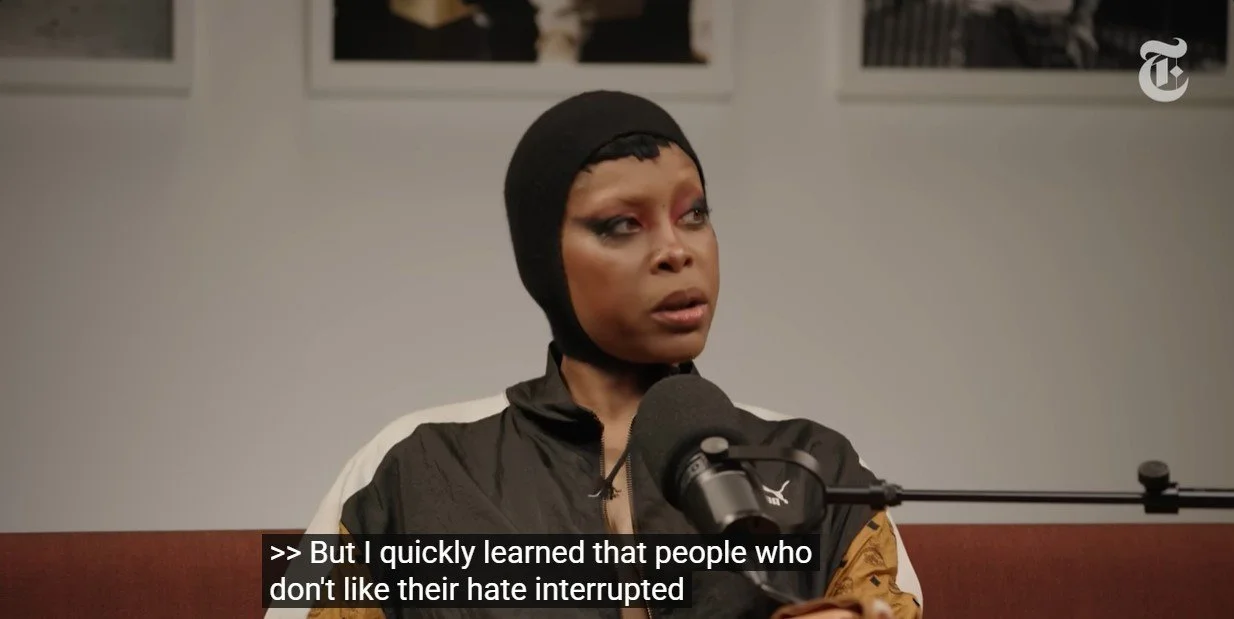
“But I quickly learned that people don’t like their hate interrupted,”
Erykah Badu on D’Angelo, Radical Empathy, Marilyn Manson, Love & Hip-Hop - The New York Times Podcast
What is Radical Compassion?
Radical compassion is the choice to see humanity even in those the world has deemed unworthy.
On the outside, radical love can seem like a great thing to do for some, and to others it might seem like a really stupid thing to do. Why should we give love to the people who have hurt others and feel no remorse for it? They are the worst of humanity and do not deserve empathy or compassion. I understand this side of it and the frustration that comes with it.
Why I Choose to Approach Compassion this way.
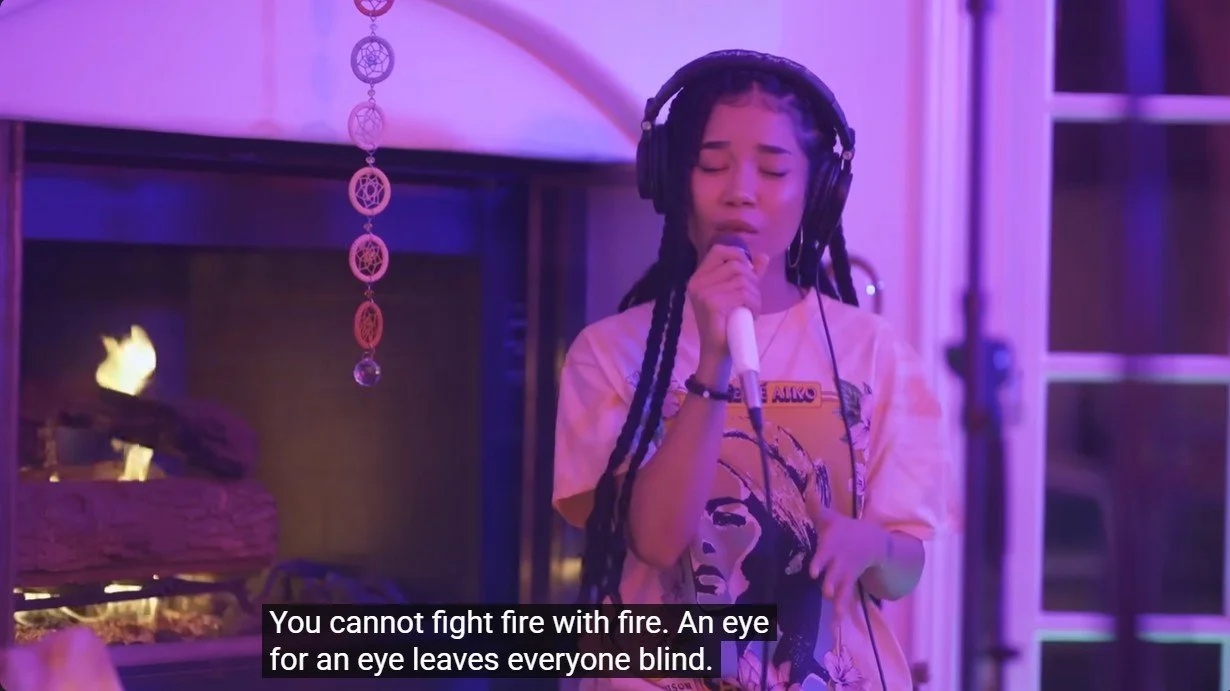
My favorite verse from Jhene Aiko’s song “ Everything Must Go”
“You cannot fight fire with fire. An eye for an eye leaves everyone blind.”
This is the point where I can only speak from my own experiences and heart. Hurting the people who have hurt us won’t bring us any relief. It just reinforces the idea that hurting people is okay in any situation. It creates a cycle of hate that never ends. If someone were to ask me whose side I’m on, I am on the side of love. I will always stand on the side of love, even if that doesn’t seem practical to others.
However, I understand that siding with love, compassion, and empathy really triggers people — and I’ve always wondered why. I think it’s inevitable to face conflict with radical compassion, and I definitely have.
When I worked at a bakery, a new protocol required us to check IDs for pre-ordered pickups. A customer took out her ID, threw it on the counter, and called me a nasty word that I cannot repeat online. I took a deep breath, explained that this was something new we were doing, and apologized for the inconvenience. But when I looked up at her face, she was so overcome by anger that I don’t think she heard a single thing I said.
She hated me — I could see it deeply in her eyes. She quickly responded that she didn’t care, and I soon realized that whatever she was angry about wasn’t the ID, the food, or even me. She was angry, period. And talking to her, trying to ease her frustration, only made it worse.
How do you navigate a situation like that? I was upset about the distasteful interaction at work, but it was what sparked my curiosity about compassion. When do we practice compassion, and who do we give it to?
I became overcome with sadness and grief after questioning my compassion. I wondered if this path was worth it — if people had already chosen their path of hatred. For a while, I gave up on radical compassion and only extended it when I felt like a friend needed it. But I soon realized that in doing so, I abandoned a part of my purpose in this world.
Why Compassion Matters to Me
Why is compassion so important, and why is it important for me to practice it radically? Because I understand the pain of suffering and the truth behind the saying hurt people hurt people. I only know this because I have been hurt before — and I’ve hurt others because of it.
The core part of practicing compassion is deep understanding. For compassion to arise, we must understand another person’s suffering. Someone who deeply understands suffering is also someone who has deeply suffered.
If I practiced compassion only towards the people who “deserve it,” my compassion would be a lie. My suffering would be a lie. My love would be a lie. Compassion isn’t selective — it’s born from suffering itself, not from who we think deserves it. It’s unconditional, because pain and struggle are universal human experiences that everyone has felt at some point in their lives.
Though I want to be clear, this does not mean sticking around for other people’s hate to leak into us. Compassion doesn’t mean self-sacrifice. Radical compassion is offering a hand to hold, whether someone grabs it or not. If they do not, that’s okay. We cannot carry the weight of the world’s hate on our shoulders. Their hate is not ours to heal; it is theirs. All we can do is set an example for others and let them know that compassion and love are here for them if they ever need it.
Where the Resistance Comes From
I think resistance to compassion comes from fear. Hate is a trauma response. Humans only act upon what they know — they respond in ways that have worked for them in the past. If their hate has protected them, given them power, or made them feel safe and validated, then naturally, anything other than that deeply scares them. It doesn’t make sense to them.
The only thing they can trust is what they know, because that’s what has gotten them through life. And I am not here to debate that. I am here to love.
This is why I connected to Erykah Badu’s saying, “People do not like their hate disturbed.” I’ve come into conflict with this many times when I’ve tried to extend my compassion to people. Although my love is unconditional, people are not always swayed by the idea of giving love so radically.
All I can say is that it doesn’t stop me from extending my love. I don’t practice compassion so that I can feel the satisfaction of helping people — I practice love because I’ve been given a gift. One that I would be selfish not to share. I understand that not everyone can or wants to love in this way, but I do.
The Reality That We Are Living In
Today, society faces numerous constraints when it comes to practicing empathy. I understand that society and culture have become increasingly opinionated when it comes to any kind of conflict. I can also see that this has resulted in hate—more than I have ever seen in my entire life. Our access and ability to come into contact with hate is as easy as clicking one button on our phones. Hate is as accessible as it has ever been in our entire human existence, and I feel immense empathy for all of us as a collective. It is incredibly scary to be an active human being right now. But maybe that is exactly why we need radical compassion more than ever.
I’m not writing this because I have the answers or because I think my approach to love is the correct one. I am just as confused and lost as everyone else right now. All I can offer the world is my presence. All I can say is that I understand, and I am suffering with you. And with that, I will leave you with this.
“I come from a place of love.”
I created this mantra for myself whenever I’m met with resistance. When I am met with hate and don’t know how to respond, I say this mantra in my head three times. It helps my mind revert back to love, so I don’t respond in a hateful way.
I truly hope it helps you as much as it has helped me.
With love always,
Ajie
